Guide five
This is the fun part, and there is no reason to be sniffy about it. Buy the tiny cardigan. Just know which things get worn to death and which are photographed once and outgrown with the tags on.
Disclosure: As an Amazon Associate I earn from qualifying purchases. Links on this page go to Amazon and may earn a commission at no additional cost to you.
The single most common first-wardrobe mistake is stocking up on newborn size. Many babies are born too big for it, and the ones who fit it are often out of it in two or three weeks. Meanwhile the 0–3 month clothes get worn constantly and the 3–6 month ones arrive in the middle of a growth spurt when you have nothing clean.
A reasonable first pass is a handful of newborn pieces, a proper stack of 0–3 month, and a few things sitting ready in 3–6. Buy the rest once you have met the baby and know what shape they are.
Sizing runs differently across brands, and it runs by weight and length rather than by age in a way the label does not always make obvious. Check the size chart on the listing rather than the number on the front, especially with sets shipped from overseas sellers, where the sizing can be a full step small.
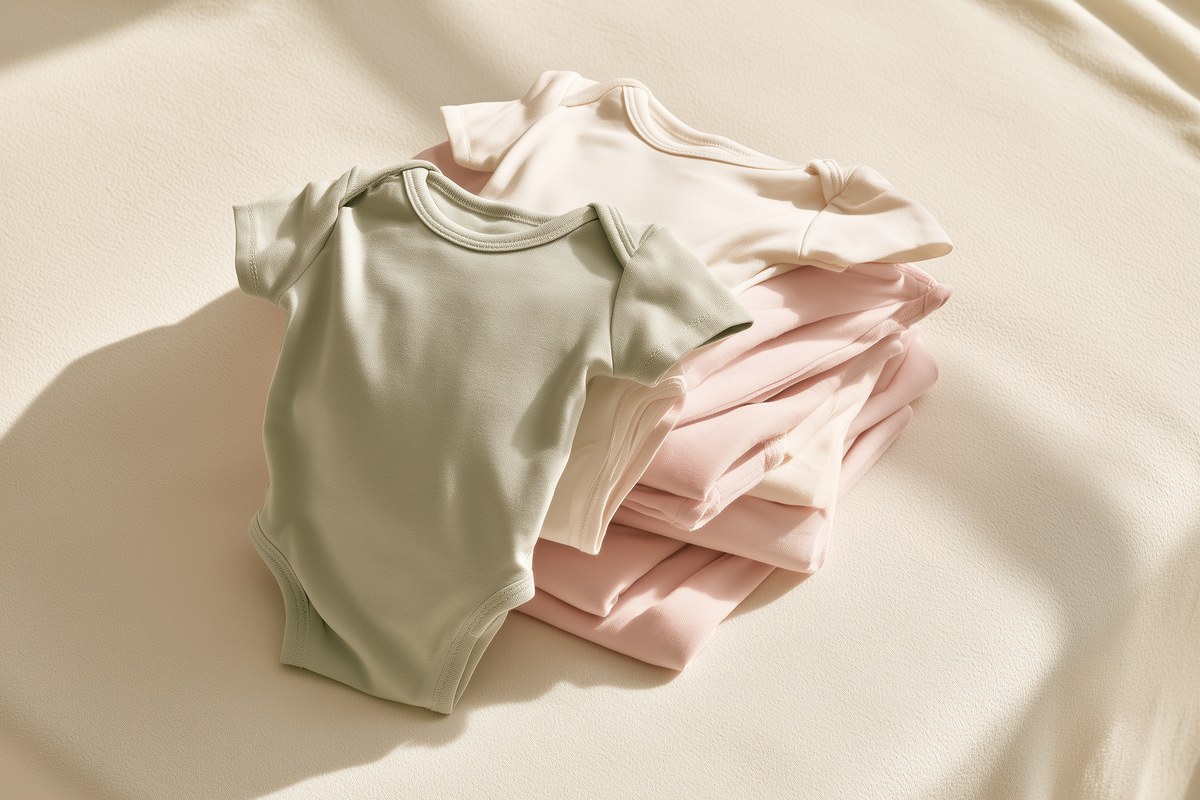
Every one of these is invisible in a product photo and decisive in practice.
Envelope shoulders. Those diagonal folds at the neck of a bodysuit are not decoration. They let you pull the garment down and off over the body rather than up over the head, which is the difference between a contained disaster and a decorated baby after a blowout. Almost every well-designed bodysuit has them.
Zips over snaps, mostly. A two-way zip on a sleeper — one that opens from the bottom as well as the top — means a diaper change without undressing the whole baby in a cold room. Snaps are fine on daywear and maddening on sleepwear. Nobody has ever aligned a fourteen-snap sleeper correctly on the first attempt in the dark.
Fold-over mitten cuffs. Newborns scratch their own faces. Sleeves that fold over into mittens solve it without you losing four separate mittens under the sofa.
Feet, or no feet, on purpose. Footed sleepers keep socks on, which is their entire argument and a good one. They also mean the whole garment is outgrown when the feet are outgrown. Both are true; buy some of each.
Nothing that goes over the head at speed. If the only way in is a narrow neck hole, it will be worn twice.
Compare zip sleepers and bodysuits on Amazon
A category search rather than a fixed pick — check the size chart and the closure type in the photos before buying.
Cotton for most things. It breathes, it washes hot, and it survives the number of washes a baby's wardrobe actually goes through. Cotton jersey and knits stretch to get over a head and shoulders, which matters more than the fiber content on the label.
Organic cotton, certified under a standard such as GOTS, is a real certification rather than a marketing word. Whether it is worth the premium is a values decision. What it is not is a treatment for sensitive skin — that conversation belongs with your pediatrician.
Bamboo viscose is popular for sleepwear because it is soft and stretchy. It is also thinner, wears out faster, and costs more. Nice for a few pieces, expensive as a whole wardrobe.
Wash everything before it goes on the baby, in a fragrance-free detergent, and skip the fabric softener. New clothing carries finishing chemicals and warehouse dust, and this is the cheapest precaution in this entire site.
Snug-fitting or flame-resistant. Children's sleepwear in the United States must be either flame-resistant or snug-fitting, and loose cotton pajamas fall outside that. This is why snug sleepers carry a yellow tag saying they are not flame resistant and should fit closely. It is a real rule with a real reason: loose fabric near a heat source is the hazard.
Nothing loose around the neck. No drawstrings in hoods, no long ribbons, no detachable bows, no beaded or knotted ties. These are strangulation and choking hazards, and they turn up constantly on decorative outfits from marketplace sellers. If a garment arrives with a charming ribbon rosette, remove it before it goes near the baby.
Baby clothing is the one category where secondhand is close to a free win. A garment worn by a baby for six weeks has effectively no wear on it, and the resale and hand-me-down market is enormous because every family in it is offloading a size every two months. Wash it hot, check the seams and the snaps, and skip anything with the loose trim described above.
The exception is sleepwear, where the snug-fit and flame-resistance labeling matters and a stretched-out secondhand sleeper no longer fits the way the rule intends.
And plan for gifts. A first baby generates an extraordinary volume of clothing from other people, concentrated almost entirely in newborn and 0–3 month sizes, and heavily weighted toward the decorative end. The practical move is to buy the dull essentials yourself and let other people buy the tiny cardigans — then keep the gift receipts, because a size you cannot use is worth more exchanged for the size you will be short of in ten weeks.
Said with affection, because most of us buy at least one of each.
The special-occasion outfit. Bought for a specific day, worn for the ninety minutes before it is thrown up on, and never worn again. Buy one, enjoy it, know what it is.
Shoes before walking. They fall off, they do nothing for foot development, and they cost as much as three bodysuits. Soft booties keep feet warm; that is the whole job.
Jeans and structured trousers. Stiff waistband over a diaper, no give when a baby folds in half. They photograph beautifully and live in the drawer.
Anything requiring an iron. Consider your actual life.
The things that genuinely earn their keep are dull and you will buy them repeatedly: plain bodysuits in multipacks, zip sleepers, soft leggings, a cardigan that goes over everything, and about twice as many socks as seems reasonable.
 Coconut Baby