Guide three
Coconut husk makes a genuinely good mattress core. It also makes an expensive one, and no mattress on earth is a safety feature. This guide separates the two claims.
Disclosure: As an Amazon Associate I earn from qualifying purchases. Links on this page go to Amazon and may earn a commission at no additional cost to you. Nothing here is medical advice — ask your pediatrician about your baby.
This section goes before the shopping advice on purpose. No mattress material, fiber, certification or price point reduces the risk of sleep-related infant death. The things that do are behavioral and they are free.
Babies sleep on their backs, on a firm and flat surface, in their own space, with nothing else in it. No pillows, no blankets, no bumpers, no wedges, no positioners, no stuffed animals — a fitted sheet and a baby. Sleep surfaces should be flat rather than inclined. Room-sharing without bed-sharing is the standard recommendation for the early months.
Confirm current guidance with your pediatrician rather than with a box, because this advice is reviewed and updated periodically, and because a product marketed as a sleep aid is marketed to a parent rather than evaluated for a baby.
Whatever mattress you buy, it must fit the crib tightly. If you can fit more than two fingers between the mattress edge and the crib frame at any point, the mattress is too small and the gap is a genuine entrapment hazard. Measure your crib's interior before ordering, and check the fit on arrival rather than assuming a standard size fits a standard crib. Return it if it does not.
Buy new where you can. A used mattress of unknown history, unknown standard and unknown storage conditions is one of the few second-hand baby items generally advised against.
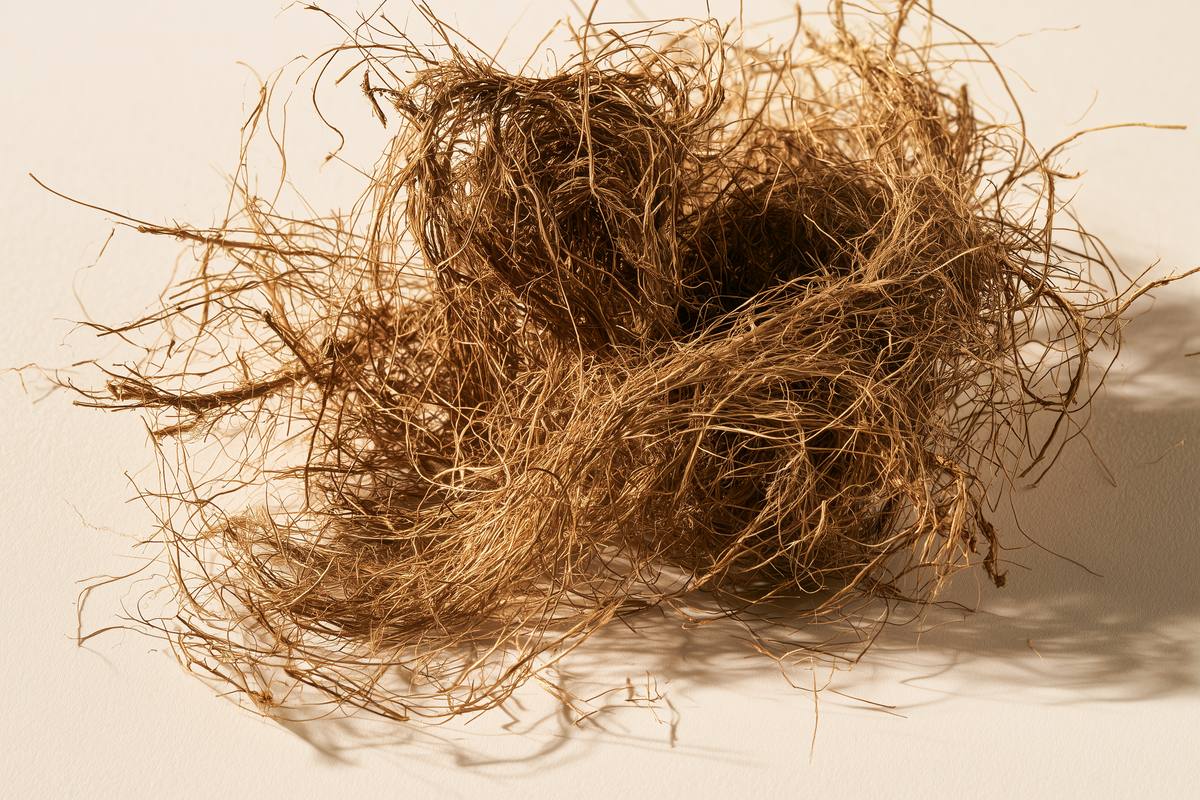
Coconut fiber — sold under its trade name, coir — is the fibrous husk between a coconut’s outer skin and its hard inner shell — the same stuff doormats and plant liners are made of. In a mattress it is compressed into a firm slab, usually bonded with natural latex, and used as the core in place of foam or springs.
Three genuine advantages, and they are real rather than marketing.
Firmness that holds. Coir is naturally rigid and does not soften and dip the way cheap foam can over a couple of years. Firmness is the property that matters most in an infant sleep surface, and coir delivers it without needing to be dense and heavy.
Airflow. The fibers are coarse and irregular, so a coir slab has air in it. That means better breathability and better moisture handling than a solid foam block, which matters in a bed that will be rained on regularly.
Fewer synthetic inputs. A coir-and-latex core is a short materials list. For parents who care about that, it is a legitimate reason to choose it, and worth being honest about: it is a preference about materials, not a demonstrated health outcome.
Compare coir crib mattresses on Amazon
Check the dimensions against your crib's interior measurement, and check the core description for latex before you buy.
Firmness. Press the center with your palm. It should barely give and should spring straight back with no impression left. Many coir mattresses are dual-sided — a firm infant side and a softer toddler side — which is a sensible design as long as you know which way up it goes and do not flip it early.
Certifications worth something. GREENGUARD Gold tests for chemical emissions. GOTS covers organic textiles in the cover. OEKO-TEX tests fabrics for harmful substances. All are third-party standards with published criteria, which is more than most words on a box can claim. What none of them certify is that the mattress is safer to sleep on.
The cover. It will be washed more than you expect. A removable, machine-washable, waterproof cover is worth more day to day than most of the features above.
Weight and price. Coir mattresses run heavier and considerably more expensive than foam. Budget accordingly, and know that a straightforward firm foam mattress meeting federal safety standards is a perfectly responsible choice.
Crib mattresses sold in the United States are subject to federal safety requirements covering dimensions, firmness and flammability, and full-size crib mattresses have standard dimensions precisely so that the fit problem above is solvable. A listing that does not state compliance with the applicable federal standard is a listing to leave alone, and this is one of the few places where a marketplace seller's vagueness should end the conversation immediately.
Two habits are worth building. Register the product with the manufacturer when it arrives, which is the only way you get told directly if it is recalled. And check the Consumer Product Safety Commission's recall listings before buying anything second-hand for a nursery, mattress or otherwise — it takes a minute and it is the single highest-value minute in furnishing a room.
New mattresses of any construction can have a smell for a few days. Unwrap it, stand it somewhere ventilated, and let it air before the crib is made up.
Coir appears elsewhere in the nursery, with diminishing returns.
Changing pads with coir cores exist and are fine. The features that matter on a changing pad are contoured sides, a safety strap, a wipeable surface and a secure attachment to the furniture. Core material is close to irrelevant. Never leave a baby unattended on one, at any height.
Play mats made from coconut fiber are usually rough, and cushioning is the point of a play mat. Coir is a poor fit for the job. Look at what is on top and how much padding is underneath instead.
Coir doormats and garden liners are not baby products, are often treated, and shed fiber. They belong outside.
 Coconut Baby