Guide four
Coconut is a good ingredient in a baby's food and a dangerous one in a baby's bottle. The distance between those two sentences is the whole guide.
Disclosure: As an Amazon Associate I earn from qualifying purchases. Links on this page go to Amazon and may earn a commission at no additional cost to you. Nothing here is medical or nutritional advice — ask your pediatrician about your baby.
Coconut milk is not infant formula and is not a substitute for breast milk. Not the canned kind, not the carton kind, not the organic kind, not diluted, not fortified, not "just for a few days." Plant beverages do not contain what an infant needs, and using them in place of breast milk or formula in the first year has caused serious malnutrition in real cases.
If you are struggling to feed your baby — supply worries, formula cost, a shortage, an allergy, a baby refusing a bottle — call your pediatrician today. There are real answers, and every one of them is better than the carton.
Once a baby is eating solids, coconut oil is a perfectly ordinary cooking fat: sauté vegetables in it, stir a little into a purée, use it in baking. Fat matters more in infant and toddler diets than in adult ones — it carries calories and helps with the absorption of certain vitamins — and a baby's food generally should not be low-fat.
Two practical notes. Virgin coconut oil carries a strong coconut flavour into whatever it touches, which is either the point or a nuisance; refined is nearly neutral and has a higher smoke point, making it the better all-round pan oil. And coconut oil is high in saturated fat, which is why it behaves like butter at room temperature. It is a fine fat in rotation with olive oil and others, and there is no reason to make it the only one.
Compare cooking coconut oil on Amazon
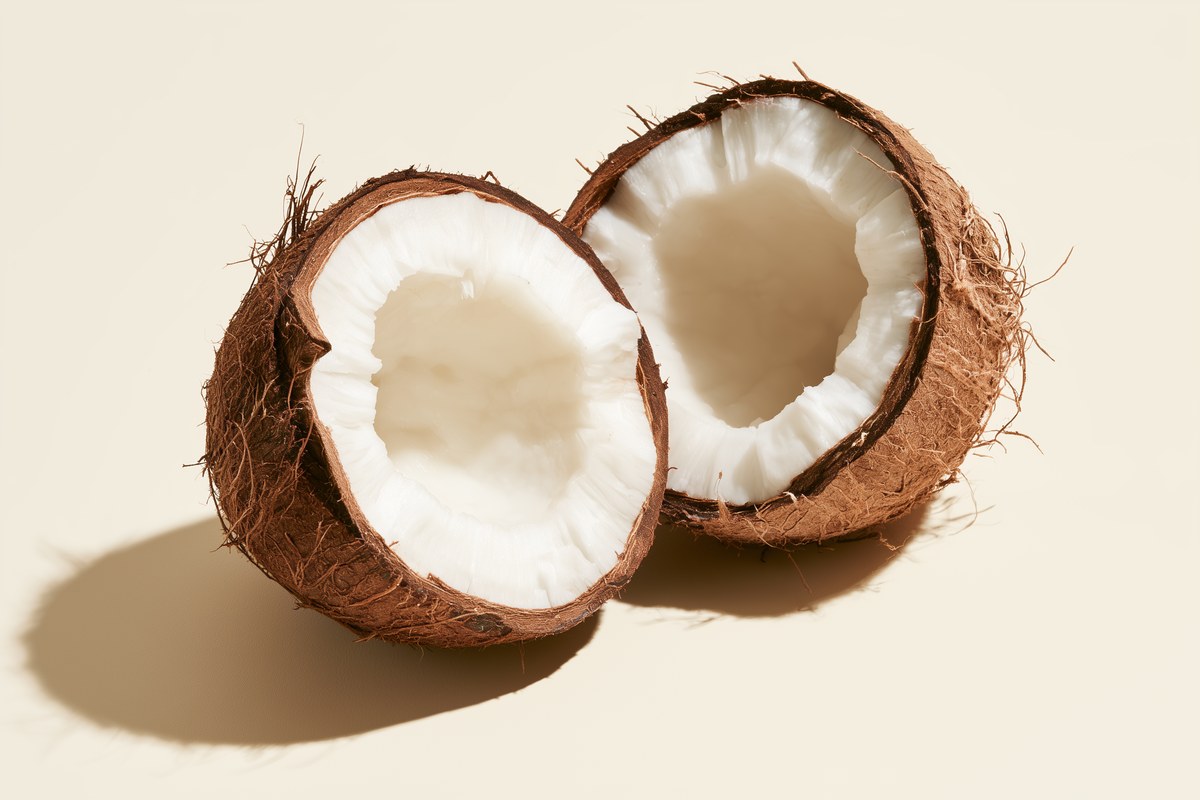
These are two different products sold under nearly the same name, and confusing them is the most common mistake in this category.
Canned coconut milk is thick, rich and made from pressed coconut flesh. It is a cooking ingredient — curries, soups, porridge, baked goods — and it works well in family food a baby is sharing. Check the can for added ingredients: the better ones contain coconut, water, and possibly guar gum, and nothing else. Look for cans stating they are not lined with BPA if that matters to you.
Carton coconut beverage, sold in the refrigerated aisle beside the almond and oat drinks, is mostly water. It is thin, low in protein and low in calories, and it is designed to be poured on cereal. It is not a cooking substitute for the can, and — again — it is not a milk for an infant.
After the first birthday, whether any plant beverage has a role in your child's diet is a conversation with your pediatrician, and the answer depends on what the rest of the diet looks like. Coconut beverage is among the lowest in protein of the options, which is the specific thing to raise.
Compare canned coconut milk on Amazon
Coconut yogurt is a useful dairy-free option for a baby who has started solids, and it has one predictable weakness: read the added sugar.
Plain dairy yogurt is naturally slightly sweet and tart. Coconut yogurt is not, so manufacturers frequently add sugar — sometimes a great deal of it, sometimes under names like cane syrup, agave or fruit juice concentrate. Added sugar is discouraged in the first two years, so this is worth thirty seconds with the nutrition panel.
The second thing to check is protein. Dairy yogurt carries a useful amount; most coconut yogurts carry very little. That is not a reason to avoid it — it is a reason to know what job it is doing in the meal.
Buy plain and unsweetened, then sweeten it yourself with mashed fruit if you want to.
Compare unsweetened coconut yogurt on Amazon
Coconut water is the thin liquid from inside a young coconut, and it is sold with a great deal of language about natural hydration and electrolytes. For an infant it has no place: babies under a year get their fluids from breast milk or formula, and extra water of any kind can be harmful. It is also, importantly, not an oral rehydration solution — if your baby is dehydrated from a stomach bug, the product your pediatrician means is a specific rehydration formulation, not a bottle from the juice aisle. For toddlers it is a sweet drink; treat it as one.
Coconut flour is dried, defatted, ground coconut meat. It is very high in fiber and extraordinarily absorbent, which makes it useful in gluten-free baking and a poor one-to-one swap for wheat flour in anything. Baked into a soft muffin or pancake for a baby-led weaning tray, it is fine. Straight from the bag it is a dry powder and a choking risk, like every other flour.
Coconut allergy is uncommon, but in the United States coconut is classified as a tree nut for food labeling purposes. Most people with tree nut allergies tolerate coconut, but "most" is not a plan — if there is any nut allergy in the family, raise coconut specifically with your pediatrician or allergist before introducing it.
Introduce it the way any new food is introduced: on its own, in a small amount, early in the day rather than at bedtime, and not alongside two other new foods. Then watch. Know what a reaction looks like and know when it is an emergency, and have that conversation before you need it.
On choking: dried coconut flakes, shredded coconut, coconut chips and chunks of fresh coconut are all hazards for babies and young children. They are dry, they are hard, and they do not soften in the mouth. Coconut for a baby means oil, milk, yogurt, or coconut cooked into something soft. Toddler snack packets of coconut chips are marketed at an age that should not be eating them.
 Coconut Baby