Guide one
It is the cheapest thing in the baby aisle that actually works, sold beside a great many expensive things that do less. It is also not a medicine, and there are babies who should not have it.
Disclosure: As an Amazon Associate I earn from qualifying purchases. Links on this page go to Amazon and may earn a commission at no additional cost to you. Nothing here is medical advice — ask your pediatrician about your baby.
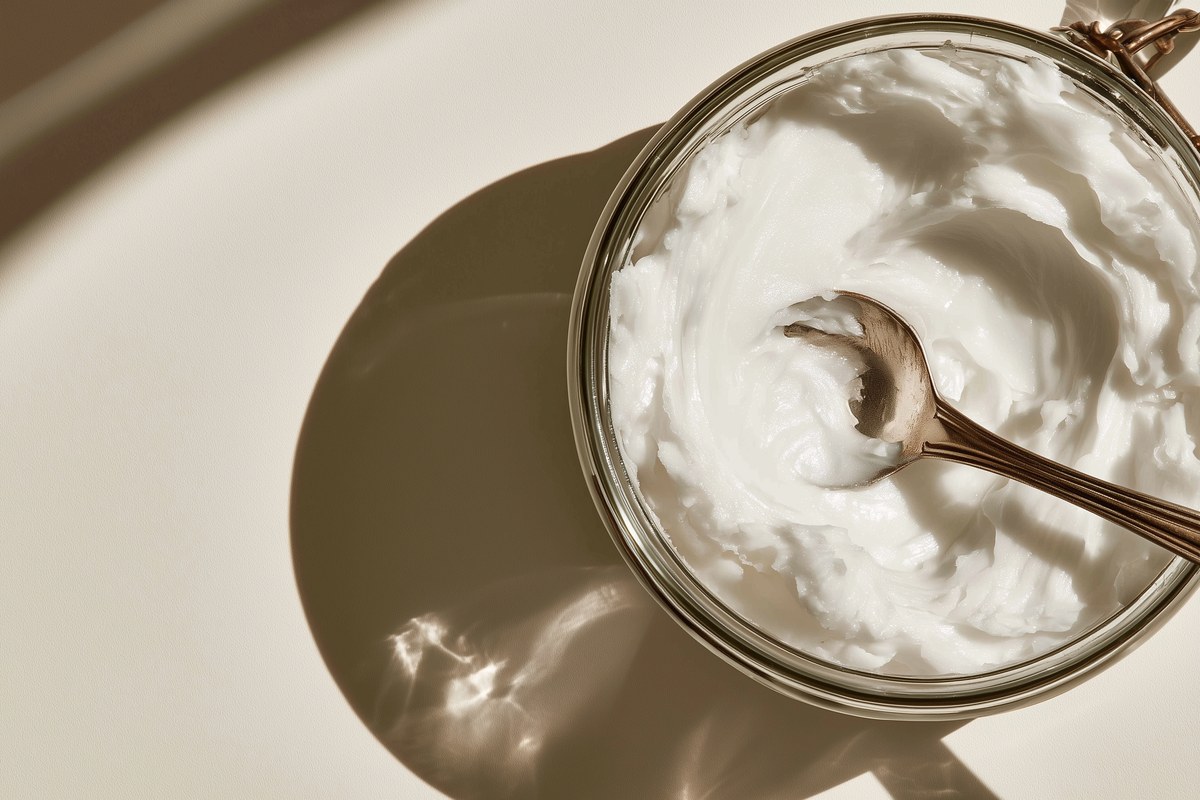
Coconut oil is fat pressed from the meat of the coconut. At room temperature in most houses it is a soft white solid; at skin temperature it melts. That is the whole trick, and it is a genuinely useful one: it goes on as a solid, so you use less than you would pour, and it turns to liquid the moment it touches a baby.
What it does on skin is what any emollient does. It sits on the surface, slows the water leaving through it, and makes the outer layer feel softer and less tight. It is not absorbed into anything, it does not repair anything, and it does not treat any condition. Emollients are unglamorous and they are the foundation of nearly all everyday skin care, for babies and for adults.
The reason it earns a page here rather than a sentence is that the baby aisle sells that same function at ten times the price with a picture of a coconut on the front and eighteen other ingredients behind it. If what you want is an emollient, you can buy the emollient.
You will see two words on jars, and the difference is real but small.
Virgin, sometimes called unrefined, extra virgin, or cold-pressed, is pressed from fresh coconut meat without high heat or chemical processing. It smells and tastes strongly of coconut. Most people buying it for a baby want this one, on the general principle of fewer processing steps.
Refined is pressed from dried coconut meat and then filtered, bleached or deodorized. It is nearly odourless and slightly cheaper. On skin it performs essentially the same job. If the coconut smell bothers you or bothers the baby, refined is a perfectly reasonable choice and not a compromise on safety.
The marketing words that follow those two — cold-pressed, centrifuged, raw, unrefined, extra virgin — are mostly gradations of the same idea, and there is no governing standard forcing them to mean anything precise. Do not pay a premium for a stack of adjectives. What you want on the label is coconut oil, and then nothing else.
There is a third jar you will meet, usually shelved with the massage products: fractionated coconut oil, sometimes sold as MCT oil. Some of the fat has been removed so that it stays liquid at room temperature and has a much longer shelf life. It pours, it spreads easily, and it does not leave the same residue — which is why massage therapists like it. It is a different product from the jar in the kitchen, generally costs more, and is not what a recipe or a general recommendation means by coconut oil. For a nursery it is a convenience choice rather than a better one.
Organic certification is a genuine third-party standard rather than a marketing word, and for a product going on a newborn every day some parents want it. It typically costs a little more. That is a values decision, not a safety one.
Compare organic virgin coconut oil on Amazon
A search rather than a single pick, so you see current prices, jar sizes and reviews. Read the ingredient list before you buy: it should say coconut oil and stop.
Patch test first, every time it is a new jar or a new baby. A small amount on a small area — the inside of a forearm is easy to watch — then leave it alone for a day. You are looking for redness, bumps, or irritation that was not there before. This costs you twenty-four hours and it is the single most useful paragraph on this page.
Use far less than you think. Scoop a piece the size of a pea, warm it between your palms until it melts, and spread it thin. Coconut oil applied thickly does not moisturize better; it just transfers to everything the baby touches, including the sheets, which will eventually go rancid-smelling if you never wash them hot.
After the bath, on slightly damp skin, is when any emollient does its best work, because there is water present for it to slow down on the way out. Pat dry, do not rub dry, then apply.
Keep it out of the bath itself. Oil in bathwater makes a slippery baby in a slippery tub, and that is a genuine hazard rather than a fussy caution.
Decant a small jar. Fingers in a large tub, several times a day, for months, is how a jar goes off. Keep a small container in the nursery and refill it from the big one.
Cradle cap, eczema, diaper rash that is not clearing, anything weeping, spreading, blistering, or accompanied by a fever — these all have specific medical answers, some of which coconut oil can interfere with. Eczema in particular has a treatment ladder your pediatrician will want to direct, and moisturizer choice is only its bottom rung.
Nothing goes in ears, noses, or on broken skin. And if your baby has a diagnosed food allergy of any kind, ask before putting a food-derived oil on their skin.
Three things, honestly. Ordinary dry skin and the flaking that many newborns do in their first weeks, which usually resolves on its own and mostly needs to be left alone and lightly moisturized. Infant massage, where you want slip and you want something harmless if it ends up in a mouth. And cost — a jar that costs a few dollars will outlast several bottles of anything sold specifically for babies.
That is a short list, and it is short on purpose. A product that is good at three things and honest about the rest is worth more in a nursery than one claiming twelve.
 Coconut Baby